


Artificial intelligence has moved beyond experimental applications and become a practical part of everyday computing. Linux users can now access AI-powered tools for programming, research, writing, automation, image creation, system management, and productivity without abandoning the flexibility that makes Linux attractive. For pblinuxtech users, this creates an opportunity to build smarter workflows while maintaining control over their operating environment.
The biggest advantage is choice. Linux supports a wide range of open-source applications, command-line utilities, local AI models, and browser-based services. Users can select lightweight tools for older hardware or take advantage of powerful local models when their systems have sufficient CPU, RAM, or GPU resources. Instead of treating AI as a replacement for traditional Linux skills, users can use it as an assistant that reduces repetitive work and accelerates problem-solving.
Why Linux Users Should Explore AI Tools
Linux has always appealed to people who want greater control over their computers. AI adds another layer of customization by allowing users to automate tasks, generate scripts, analyze information, and improve workflows according to individual needs.
For pblinuxtech readers, the most valuable AI tools are not necessarily the most complicated ones. A useful tool should solve a real problem, integrate comfortably with an existing workflow, and provide enough flexibility to adapt to different Linux distributions.
AI can help with tasks such as:
- Generating and reviewing shell commands
- Explaining programming errors
- Summarizing technical documentation
- Creating scripts for repetitive operations
- Organizing research notes
- Improving written content
- Generating ideas for projects
- Analyzing logs and configuration files
- Supporting software development
The key is to use AI as a productivity layer rather than depending on it blindly.
Best Categories of AI Tools for Linux
AI Coding Assistants
Programming is one of the strongest areas for AI-assisted Linux workflows. Coding assistants can suggest functions, explain unfamiliar syntax, identify potential bugs, and help developers understand large sections of code.
Linux developers working with Python, JavaScript, C, C++, Rust, Go, or shell scripting can benefit significantly. An AI assistant can also help transform a simple requirement into a basic script, which users can then inspect and modify.
For pblinuxtech users who regularly experiment with software projects, AI coding assistants can shorten the time between an idea and a working prototype. However, generated code should always be reviewed for security, compatibility, performance, and correctness.
Local AI Models
Running AI models locally is particularly interesting for Linux enthusiasts. Local models can provide greater control over data and reduce dependence on cloud-based processing.
Depending on hardware, users can experiment with smaller language models that operate directly on their computers. This approach can be useful for private notes, coding experiments, document analysis, and offline workflows.
Local AI also encourages Linux users to understand how models, memory requirements, processors, and GPUs interact. It turns AI from a simple application into another technical environment that users can explore and customize.
AI Writing and Research Tools
AI writing tools can help users organize ideas, create outlines, summarize long material, and improve readability. Researchers and students can use them to turn scattered notes into structured information.
The most effective workflow is collaborative. Instead of asking an AI tool to produce everything automatically, users can provide their own research, verify important claims, and use AI primarily for organization and refinement.
For pblinuxtech users creating technical documentation, project notes, tutorials, or educational content, this can save substantial time while preserving human judgment.
AI for Linux Automation
Automation is already an important part of Linux administration, and AI can make it easier to design automation workflows. A user can describe a repetitive task in natural language and ask an AI assistant to suggest a shell script or automation approach.
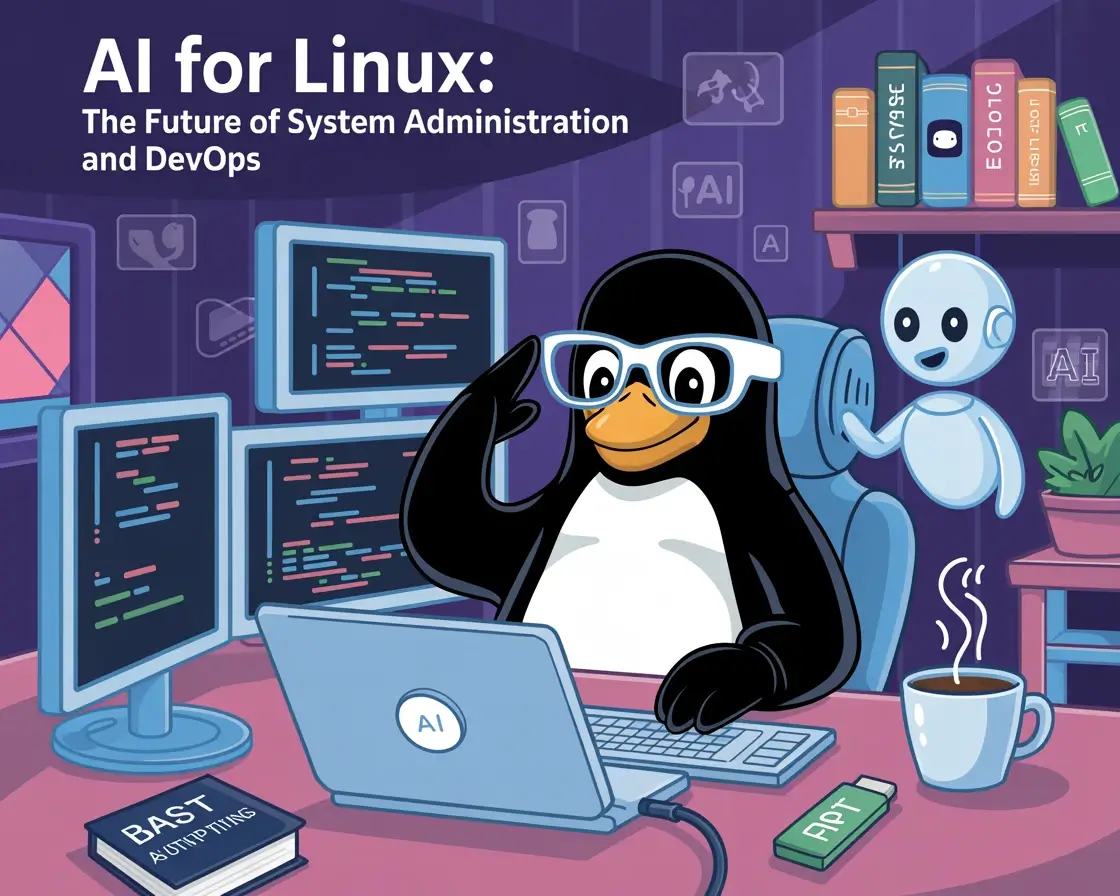
For example, someone might need to rename hundreds of files, organize directories, monitor disk usage, process logs, or create scheduled maintenance commands. AI can help generate an initial solution and explain how each command works.
This is especially useful for beginners because Linux commands can initially appear intimidating. Rather than copying commands without understanding them, users can ask for explanations and learn the underlying concepts.
Experienced users can also benefit by using AI for brainstorming and rapid prototyping before manually optimizing a final script.
AI-Powered Security Assistance
Security is another area where AI can provide useful assistance, although it should never be treated as an unquestionable authority. Linux administrators can use AI to interpret unfamiliar log entries, explain configuration options, identify potential security concerns, and suggest areas that deserve further investigation.
AI can help translate complicated security terminology into understandable language. It may also assist with reviewing scripts for obvious weaknesses.
However, sensitive credentials, private keys, confidential configuration information, and personal data should not be submitted to an AI service without understanding its privacy and data-handling policies.
AI Image and Creative Tools
Linux users interested in creative work can also explore AI-powered image generation and editing. These applications can assist with concept development, illustrations, design experiments, thumbnails, presentations, and other visual projects.
The Linux ecosystem provides opportunities to experiment with both online services and locally hosted solutions. Hardware requirements vary considerably, so users should check memory, GPU compatibility, storage requirements, and software dependencies before choosing a local solution.
Creative AI works particularly well when the user provides strong direction. Instead of accepting the first generated result, users can refine prompts, compositions, layouts, and visual concepts until the output fits the intended purpose.
AI Tools and Hardware Considerations
Not every Linux computer is equally prepared for AI workloads. Cloud-based tools generally require less local hardware, while running models directly on a machine can require considerable memory and processing power.
| AI Tool Category | Hardware Demand | Best Use |
|---|---|---|
| Cloud AI assistants | Low | Writing, research, general questions |
| Coding assistants | Low to Medium | Programming and debugging |
| Local language models | Medium to High | Private AI experimentation |
| AI image generation | High | Creative and visual projects |
| AI automation tools | Low to Medium | Scripts and workflows |
| AI data analysis | Medium | Research and large datasets |
Users with older laptops should not assume that AI is inaccessible. Lightweight applications, browser-based tools, and smaller local models can still provide useful functionality.
Choosing the Right AI Tool
The best AI tool depends on the user’s actual workflow. Installing numerous applications simply because they are popular can create unnecessary complexity.
Before selecting a tool, consider:
- Does it support your Linux distribution?
- Can your hardware handle it comfortably?
- Does it require an online account?
- How does it handle private information?
- Does it integrate with your existing applications?
- Is there a free or open-source alternative?
- Can you export your work if you change tools later?
For pblinuxtech users, flexibility should be a major consideration. A tool that works across different distributions and interfaces is often more valuable than one with dozens of unnecessary features.
Building a Smarter Linux Workflow
AI becomes most useful when combined with traditional Linux knowledge. Users should continue learning commands, package management, permissions, networking, file systems, scripting, and troubleshooting instead of allowing AI to replace those skills.
A practical workflow might begin with an AI assistant helping to understand a problem. The user can then test the proposed solution in a safe environment, inspect the commands, make necessary modifications, and document the final result.
This approach creates a balance between speed and control. AI handles brainstorming and repetitive reasoning, while the user remains responsible for decisions and implementation.
For pblinuxtech users, that balance can turn AI from a novelty into a dependable productivity tool.
The Growing Role of Open-Source AI
One of the most exciting developments is the growing availability of open-source AI models and supporting software. Linux has historically been a strong environment for experimentation, and AI is extending that tradition.
Open-source projects can offer greater transparency and customization than closed platforms. Advanced users can experiment with model configurations, local deployments, APIs, integrations, and custom workflows.
There are still challenges, including hardware requirements, installation complexity, model quality, and maintenance. Nevertheless, the combination of Linux and open AI technologies gives technically minded users an unusually broad playground for experimentation.
Common Mistakes to Avoid
AI tools can make technical tasks faster, but they can also introduce mistakes. Generated commands may be incompatible with a particular distribution, scripts may contain errors, and technical explanations can occasionally be inaccurate.
A few simple habits can reduce these risks:
- Read generated commands before executing them.
- Back up important files before major changes.
- Test scripts in a safe environment.
- Verify technical information with reliable documentation.
- Avoid exposing passwords, tokens, or private keys.
- Keep software and dependencies updated.
AI should make Linux work more efficient without removing the user’s responsibility for system safety.
What AI Means for Linux Users in 2026
The relationship between Linux and artificial intelligence is likely to become even stronger as local models improve and hardware becomes more capable. AI assistants will increasingly move beyond answering questions toward interacting with applications, analyzing files, automating workflows, and supporting development environments.
For pblinuxtech readers, this means there is no single reason to explore AI. Developers can use it for coding, administrators can use it for troubleshooting, students can use it for learning, and creators can use it for experimentation.
The most important development may be accessibility. AI tools that once required advanced technical knowledge are becoming easier to install and operate. At the same time, experienced Linux users still have opportunities to customize these systems at a deeper level.
Conclusion
AI is becoming an important part of modern computing, and Linux users are in an excellent position to take advantage of it. From coding assistants and local language models to automation, research, security analysis, and creative applications, there are tools available for almost every type of workflow.
The smartest approach is not to install every AI application available. Instead, identify repetitive or difficult tasks, choose tools that fit your hardware and privacy requirements, and test them carefully. Keep developing fundamental Linux knowledge while using AI to accelerate the work around it. For pblinuxtech users, exploring AI this year can be more than following a technology trend. It can be an opportunity to build faster, more flexible, and more intelligent Linux workflows while retaining the control and customization that make Linux so powerful.