


Technology is moving at an extraordinary pace, with new discoveries appearing across artificial intelligence, robotics, computing, cybersecurity, energy, and connected devices. What seems experimental today can quickly become part of everyday life tomorrow. For readers following technology developments, understanding these early-stage innovations is useful because it reveals where industries, businesses, and consumers may be heading next. pblinuxtech readers can benefit from looking beyond established products and paying attention to technologies that are gradually moving from research laboratories into practical applications. Emerging innovations are not always immediately successful, but they can create entirely new markets when technical limitations are solved. The most interesting developments often combine several technologies rather than relying on one breakthrough. AI paired with robotics, advanced chips combined with specialized software, and renewable energy integrated with intelligent storage are examples of this broader transformation.
Artificial Intelligence Is Becoming More Capable
Artificial intelligence remains one of the most influential areas of technological development. Modern AI systems are moving beyond simple question answering and content generation toward tools that can analyze information, operate software, assist with complex workflows, and support decision-making. The next stage is likely to involve more specialized AI systems designed for particular industries such as engineering, medicine, finance, manufacturing, and education. Instead of replacing every existing application, these systems may increasingly become an intelligent layer working alongside traditional software.
Another important development is the movement toward smaller and more efficient AI models. Large systems require significant computing resources, while compact models can potentially operate directly on laptops, smartphones, vehicles, and other devices. This could improve privacy, reduce latency, and make advanced AI available without constant cloud connectivity. For pblinuxtech readers interested in computing, this shift toward local intelligence is particularly important because it could influence how future operating systems and applications are designed.
AI Agents Could Change Digital Work
AI agents represent another emerging direction. Rather than simply responding to an individual prompt, an agent can potentially plan several actions, interact with software, examine results, and continue working toward a defined objective. Businesses are experimenting with these systems for research, customer service, programming, data analysis, and administrative tasks.
The challenge is reliability. An intelligent system must understand context, avoid costly mistakes, protect sensitive information, and know when human approval is necessary. As these problems improve, AI agents could become a normal part of digital workflows rather than an experimental feature.
Quantum Computing Continues Its Long Development
Quantum computing remains one of the most ambitious areas of modern computing research. Unlike conventional computers, quantum machines use quantum states to process certain types of information in fundamentally different ways. Their potential is especially interesting for complex optimization, scientific simulation, cryptography, and materials research.
However, quantum computing should not be viewed as an immediate replacement for conventional computers. Building stable quantum systems is technically difficult, and researchers continue working on error correction, scalability, and hardware reliability. The most meaningful progress may therefore arrive gradually through specialized applications and hybrid systems that combine quantum processors with classical computing infrastructure.
For technology enthusiasts, pblinuxtech provides a useful conceptual starting point for considering how major changes in computing architecture could eventually affect software development, security, and data processing.
Robotics Is Moving Into More Real-World Environments
Robotics is another field experiencing rapid progress. Industrial robots have been used for decades, but newer machines are becoming more adaptable. Improvements in computer vision, sensors, machine learning, batteries, and lightweight mechanical components are helping robots operate in environments that previously required extensive human control.

Humanoid robots are attracting particular attention because their physical form is designed around environments built for people. Future applications could include warehouses, factories, logistics centers, laboratories, and potentially domestic environments. Yet practical deployment depends on much more than impressive demonstrations. Robots must become affordable, safe, energy-efficient, reliable, and capable of handling unpredictable situations.
Smarter Machines Need Better Software
Hardware alone cannot make a robot useful. Advanced perception, navigation, planning, and control software are equally important. AI can help machines identify objects, interpret surroundings, and adjust their actions based on changing conditions.
This combination of physical machines and intelligent software could create a new generation of automation. Rather than performing one repetitive movement, robots may eventually handle broader tasks with greater flexibility.
Next-Generation Chips Are Reshaping Computing
Semiconductor technology is becoming increasingly specialized. Instead of relying entirely on general-purpose processors, modern devices are incorporating dedicated accelerators for AI, graphics, security, networking, and other demanding workloads. This trend allows computers to perform specific operations more efficiently.
The growth of AI has accelerated demand for specialized processors capable of handling large amounts of parallel computation. At the same time, energy efficiency has become a major consideration because powerful processors generate heat and consume substantial electricity.
For pblinuxtech readers interested in hardware and software, this development is significant because future applications may increasingly be designed around the capabilities of specialized chips. Operating systems will need to coordinate different processing units efficiently, while developers will need to understand how software can take advantage of available hardware acceleration.
Technology Is Becoming More Energy Conscious
The future of technology is closely connected to energy. Data centers, AI workloads, electric vehicles, smart homes, and connected infrastructure all require electricity. As digital systems expand, improving energy efficiency is becoming just as important as increasing performance.
New battery chemistries, improved solar technologies, advanced power management, and smarter energy storage systems are being developed to address this challenge. Computing hardware is also being redesigned to deliver more performance while consuming less power.
Smart grids could become another major part of this transformation. By combining sensors, software, energy storage, and renewable generation, electricity networks can potentially respond more intelligently to changes in supply and demand.
Extended Reality Could Become More Practical
Virtual reality, augmented reality, and mixed reality continue to evolve. Earlier devices often struggled with high prices, limited battery life, uncomfortable designs, and a shortage of compelling applications. New generations of hardware are attempting to address these barriers through lighter designs, better displays, improved tracking, and more capable processors.
The most useful applications may not necessarily involve entertainment. Training, engineering visualization, remote collaboration, education, industrial maintenance, and design could all benefit from immersive interfaces.
As hardware becomes smaller and software improves, extended reality could gradually become less of a novelty and more of a practical computing platform.
Cybersecurity Will Become Even More Important
Every new digital capability introduces additional security challenges. Connected devices, AI systems, cloud services, smart infrastructure, and autonomous machines all expand the number of potential attack surfaces.
Future cybersecurity strategies will increasingly rely on automated monitoring, stronger identity systems, hardware-based security, encryption, and rapid threat detection. AI may assist defenders by identifying unusual behavior, but attackers can also use automation to develop more sophisticated threats.
| Emerging Technology | Potential Impact | Key Challenge |
|---|---|---|
| AI agents | Automate complex digital tasks | Reliability and oversight |
| Quantum computing | Solve specialized computational problems | Error correction and scalability |
| Advanced robotics | Flexible physical automation | Safety and cost |
| AI accelerators | Faster specialized workloads | Power consumption |
| Smart energy systems | Better energy management | Infrastructure upgrades |
| Extended reality | New interaction methods | Comfort and adoption |
| Advanced cybersecurity | Stronger digital protection | Increasing attack complexity |
Biotechnology and Computing Are Converging
One of the most fascinating developments is the growing relationship between computing and biology. Researchers are using machine learning to analyze biological data, discover molecular patterns, and accelerate scientific research. Improvements in computational tools can help researchers examine enormous datasets that would be difficult to process manually.
This does not mean every biological problem can be solved through software. Laboratory experimentation and scientific validation remain essential. However, better computational models can shorten research cycles and help scientists identify promising possibilities more efficiently.
The combination of AI, automation, advanced imaging, and biological research could become one of the defining technology trends of the coming decade.
What These Developments Mean for Everyday Users
Emerging technology can sound distant when discussed in terms of laboratories and research projects, but its effects often reach consumers gradually. AI assistants may become more personalized, devices may process more information locally, vehicles may gain additional automated capabilities, and smart energy systems may influence how homes consume electricity.
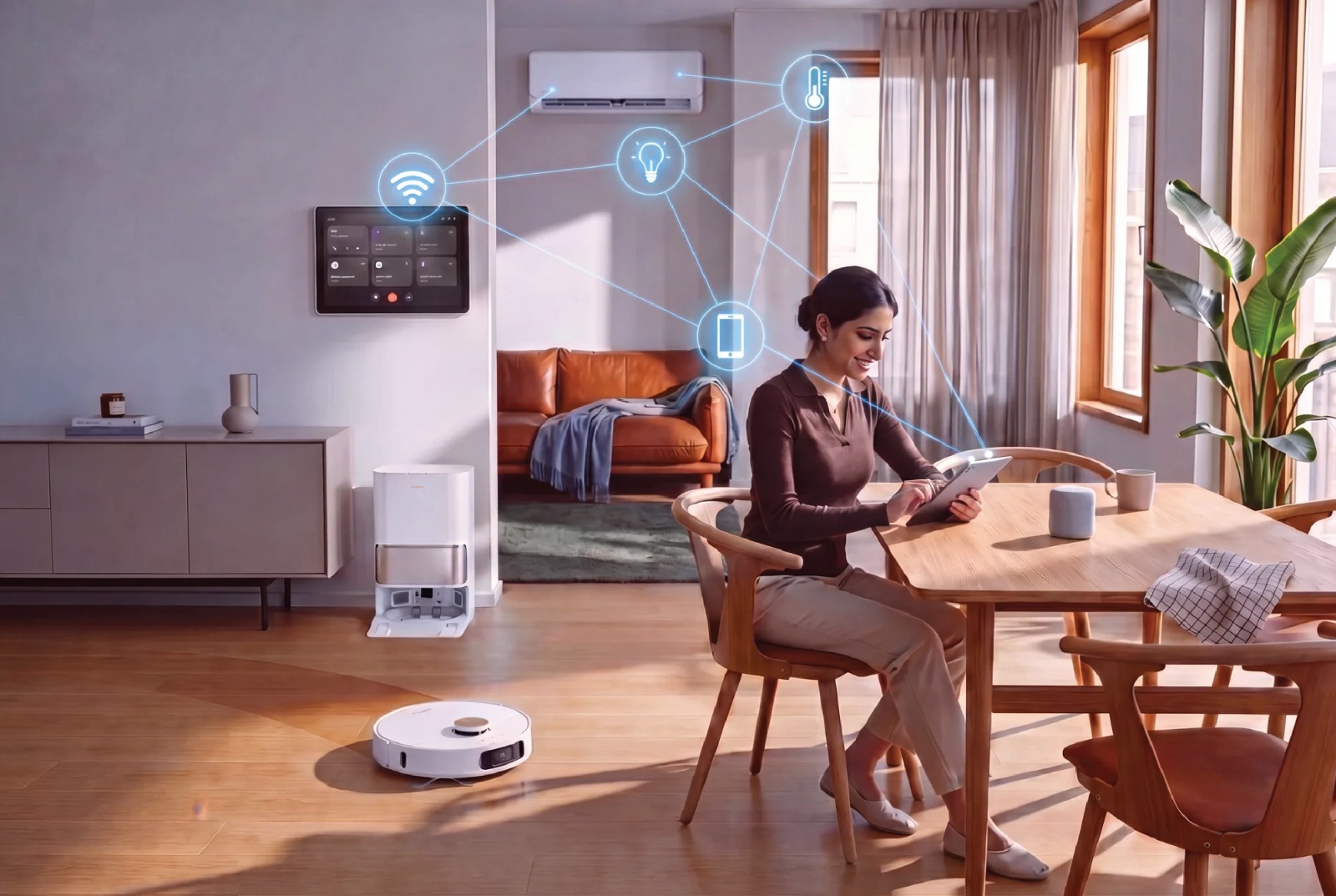
For consumers, the most important consideration is not simply owning the newest technology. Understanding privacy, security, compatibility, repairability, energy consumption, and long-term usefulness can help people make better decisions.
Readers following technology developments should therefore focus on practical progress rather than hype. A product demonstration can attract attention, but widespread adoption usually depends on affordability, reliability, convenience, and measurable benefits.
Why Watching Early Technology Trends Matters
Following emerging technology gives people a better understanding of how industries evolve. Some technologies will fail, while others will become fundamental infrastructure. The difficult part is identifying which innovations have genuine long-term potential.
pblinuxtech readers should watch for developments that solve clear problems, become more affordable, integrate with existing systems, and demonstrate steady improvements over time. Technologies supported by strong research and practical applications are generally more interesting than concepts based solely on marketing claims.
Another useful approach is to examine how multiple technologies intersect. AI combined with robotics could transform automation. Advanced chips combined with local AI could change personal computing. Renewable energy combined with intelligent storage could reshape electricity management. These intersections often create opportunities that are difficult to see when each technology is considered separately.
Conclusion
The next generation of technology will not be defined by one single invention. Instead, progress is likely to emerge from the convergence of artificial intelligence, specialized computing, robotics, cybersecurity, energy innovation, immersive interfaces, and biotechnology. Each field is developing independently, but their combination could create much larger changes across society and business. For pblinuxtech readers, keeping track of these developments means looking beyond headlines and examining how technologies move from experimental concepts toward reliable real-world applications. AI agents, efficient processors, advanced robots, quantum systems, smart energy networks, and stronger cybersecurity are all worth watching closely.
The biggest breakthroughs may not arrive exactly as predicted, and some highly publicized technologies may take longer than expected. Nevertheless, understanding the direction of innovation provides a valuable advantage. By staying curious, evaluating new developments critically, and focusing on practical impact, readers can better understand the technological changes that may shape the years ahead.